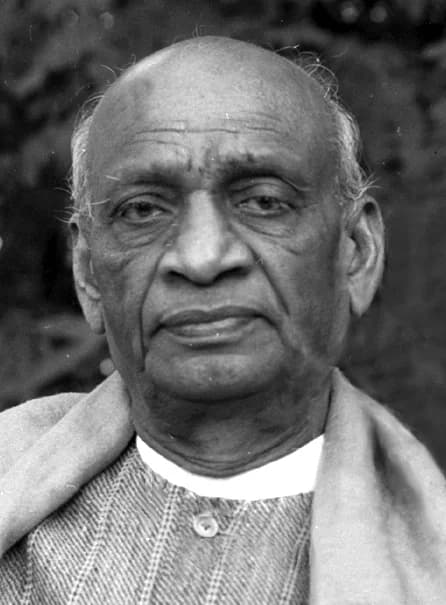
Integration of the Princely States

Integration of the Princely States

India’s political integration transformed a fragmented post-colonial landscape into a Union—while leaving the continuing task of balancing unity with autonomy.

The Moment

What happened and when?

At Independence, British India included directly ruled provinces and 565 princely states. With the lapse of British paramountcy in 1947, these states were no longer bound to the British Crown and had to decide their political future.

The Government of India created the States Department, led by Sardar Vallabhbhai Patel with V. P. Menon as Secretary. Between 1947 and 1949, the department negotiated the accession and merger of the princely states into the Indian Union.

The main legal instrument was the Instrument of Accession, through which rulers transferred control over defence, external affairs and communications to India. Standstill Agreements were also used to continue existing administrative arrangements during the transition.

The Problem

What challenge or condition existed?

The end of British paramountcy created the possibility of political fragmentation. Some princely states considered independence or accession to Pakistan, even when they were geographically surrounded by India.

The challenges included:

integrating territories with different sizes, laws and political systems;

maintaining defence, transport and communication networks;

preventing foreign influence and rival power centres;

balancing hereditary rulers with popular political aspirations;

avoiding conflict while ensuring territorial unity.

The issue was not merely legal. Fragmentation could have produced administrative disorder, economic barriers and serious security risks. However, rapid integration also raised questions about consent, regional identity and the use of force.

The Choice

What direction did India adopt?

India used a combination of negotiation, legal accession, political persuasion, financial guarantees and, in exceptional cases, military action.

The Instrument of Accession initially allowed rulers to retain considerable internal authority. They were also offered assurances regarding their privileges and privy purses. Smaller states were later merged into larger administrative units or adjoining provinces.

Three important cases were:

Junagadh: Its ruler announced accession to Pakistan despite its predominantly Hindu population and location within India. India intervened, and the state was subsequently integrated.

Hyderabad: The Nizam sought independence. Following unrest and violence involving the Razakars, India launched Operation Polo in September 1948.

Jammu and Kashmir: Its accession to India took place amid armed conflict and remains connected to the continuing Kashmir dispute.

The process strengthened unity but involved a trade-off between territorial consolidation, autonomy, consent and democratic participation.

The Transformation

What changed as a result?

By 1949, most princely territories had been acceded, merged or constitutionally incorporated into the Indian Union.

This created:

a more coherent national territory;

common systems of defence, communication and administration;

greater economic and political integration;

the territorial foundation of the federal Constitution;

a transition from monarchical authority to representative government.

Integration did not produce immediate uniformity. Different regions entered the Union through different agreements and administrative arrangements. Later constitutional changes and the reorganisation of states continued to reshape Centre–State relations.

The Unfinished Story

What remained unresolved?

Political integration did not eliminate questions of regional identity and autonomy.

Communities continued to seek recognition of their language, culture and historical distinctiveness.

The balance between a strong Union and meaningful state autonomy remained an ongoing constitutional issue.

The use of force in Hyderabad and other cases continues to invite historical debate.

Former princely privileges were eventually abolished; privy purses ended through a constitutional amendment in 1971.

Territorial integration did not automatically ensure democratic participation, social equality or balanced development.

The larger lesson is that unity requires more than common borders. It also depends on federal accommodation, constitutional governance and public legitimacy.

Did you know?

  • The rulers initially transferred only selected subjects—mainly defence, external affairs and communications—rather than surrendering all internal powers immediately.
  • Integration was not completed through one single act; it involved accession, merger agreements and administrative reorganisation.
  • The integration of the princely states was largely completed between 1947 and 1949, but the political and constitutional reorganisation of India continued for decades.
  • Privy purses, offered to former rulers as part of the integration settlement, were abolished in 1971.
  • “Unity in diversity” has a practical administrative history: India had to bring together territories with different rulers, laws, institutions and political traditions.