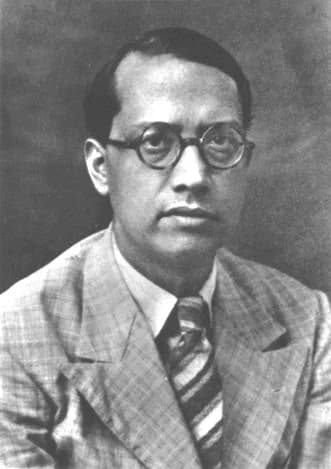
Election Commission & Electoral Architecture — 1950

Election Commission & Electoral Architecture — 1950

In 1950, India built the constitutional machinery that turned universal franchise into democracy at an unprecedented scale.

The Moment

What happened and when?

The Election Commission of India (ECI) was established on 25 January 1950, one day before India became a republic. It was created under Article 324 of the Constitution as a permanent constitutional body responsible for managing elections in the new democracy.

The institution’s first major challenge was preparing India for its first general elections in 1951–52. It had to create electoral rolls, define constituencies, establish polling stations and design a system that could include a vast, diverse and largely inexperienced electorate.

The Problem

What challenge or condition existed?

India had adopted universal adult franchise despite widespread poverty, illiteracy, limited transport and weak administrative capacity.

The ECI therefore had to address several challenges:

preparing electoral rolls across a vast territory;

registering displaced persons and new citizens;

ensuring that women were recorded as independent voters;

delimiting constituencies after Partition and territorial integration;

arranging polling in remote, rural and difficult terrain;

preventing intimidation, malpractice and administrative bias;

building public confidence in elections and political participation.

India had no established experience of conducting elections on this scale. Electoral democracy had to be created while the country was still dealing with Partition, refugee rehabilitation and institutional reorganisation.

The Choice

What direction did India adopt?

The Constitution entrusted the ECI with the “superintendence, direction and control” of elections to Parliament, State Legislatures and the offices of the President and Vice-President.

This was a deliberate choice to place election management within a constitutional institution rather than leave it entirely to the government of the day. The broader electoral framework was supported by:

universal adult franchise;

independent electoral rolls;

constituency delimitation;

secret ballot;

election laws and procedures;

symbols to assist voters who could not read;

an administrative machinery dedicated to conducting polls.

The arrangement did not make the electoral process automatically perfect. It created an institutional framework whose credibility would depend on impartial administration, political competition, legal oversight and public trust.

The Transformation

What changed as a result?

The ECI helped convert the constitutional promise of democracy into a functioning electoral system.

For the first general elections of 1951–52, India organised elections for 489 Lok Sabha seats and approximately 3,283 state legislative seats. Around 173 million electors were served through approximately 1,32,560 polling stations and 1,96,084 polling booths.

The ECI used ballot boxes, symbols, multiple phases and extensive logistical planning to enable participation across a largely rural and substantially illiterate population. The exercise demonstrated that democratic citizenship would not remain limited to political elites or the Constituent Assembly.

Over time, electoral administration evolved through:

election laws and rules;

delimitation of constituencies;

voter registration and identification systems;

electronic voting machines and voter-verifiable paper trails;

expenditure monitoring;

voter education;

technological and digital tools.

The ECI consequently became a central institution in India’s democratic architecture.

The Unfinished Story

What remained unresolved?

The existence of an election authority does not by itself guarantee perfect elections. Continuing concerns include:

errors, exclusions and delays in electoral rolls;

political influence and questions about institutional independence;

money power, criminalisation and excessive campaign expenditure;

misinformation and the use of digital platforms;

debates over electronic voting machines and voter-verifiable paper trails;

delimitation and the political representation of different regions;

accessibility for migrants, persons with disabilities and other vulnerable voters;

the need for greater transparency and public confidence.

Electoral reform must therefore balance administrative efficiency, voter access, political freedom, institutional autonomy and public accountability.

Did you know?

  • The ECI was established on 25 January 1950, which is observed as National Voters’ Day.
  • It was created one day before India became a republic.
  • Article 324 covers elections to Parliament, State Legislatures and the offices of the President and Vice-President; local-body elections are conducted by State Election Commissions.
  • India’s first elections required the use of symbols because many voters were unable to read.
  • The ECI began as a small institution but evolved into one of the world’s largest election-management bodies.
  • The first general elections were not a single-day event; they were conducted in phases across difficult geographical and logistical conditions.